
Blue Bandages: Why They’re Used in Food Service and Industrial Workplaces
If you’ve ever noticed bright blue bandages in a restaurant kitchen, food factory, or commercial food-prep environment, that color choice is intentional.
Blue adhesive bandages are designed to be easy to spot if they accidentally fall into food or work areas, helping improve hygiene, safety, and quality control. They’re widely used across food service and food manufacturing because visibility matters.
In this guide, we’ll explain what blue bandages are, why they’re different from standard skin-tone bandages, where they’re used, and how to choose the right type.
What Is a Blue Bandage?
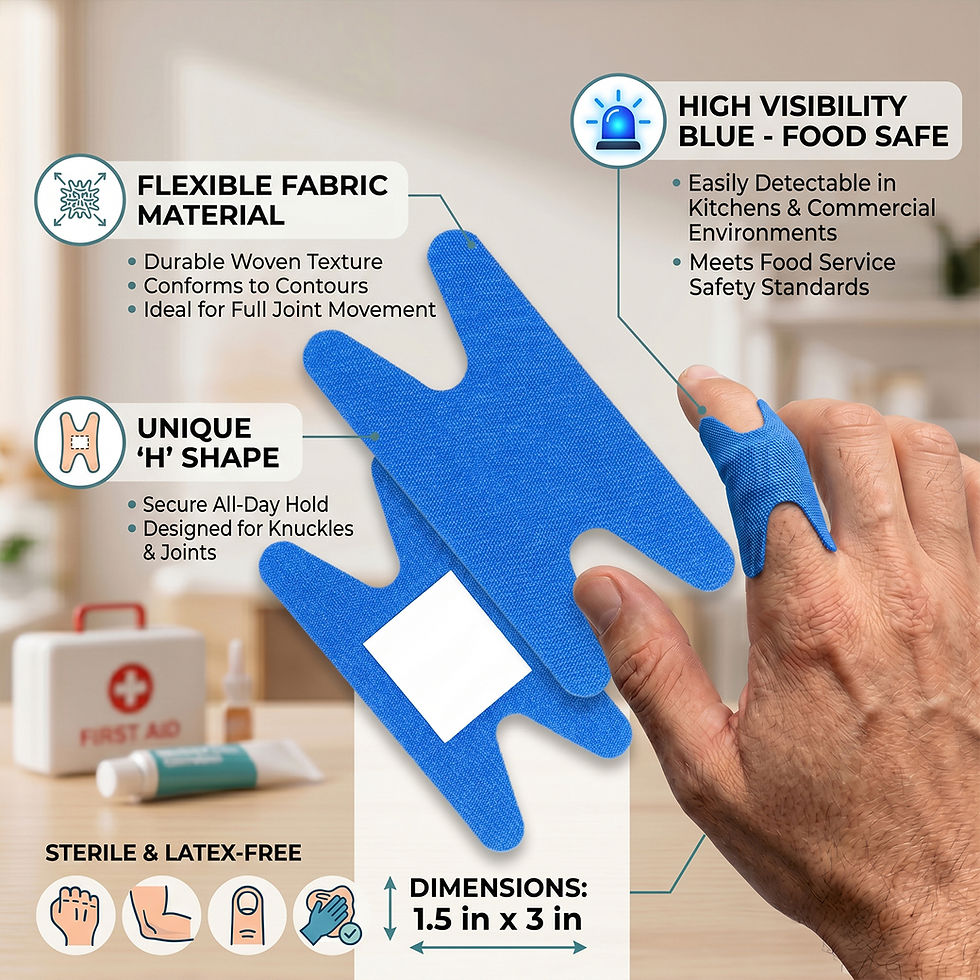
A blue bandage is an adhesive wound dressing made with a high-visibility blue color instead of traditional beige or transparent materials.
The main purpose is simple:
Make the bandage easier to detect
Reduce contamination risks
Support workplace food-safety practices
Encourage faster identification if lost
Because naturally blue-colored foods are relatively uncommon, a blue bandage stands out more clearly in food production environments.
Why Are Bandages Blue in Food Service?
1. Improved Visibility
Food safety depends on reducing foreign-object contamination.
If a standard beige bandage slips off during food preparation, it may blend into ingredients or surfaces. Blue creates stronger visual contrast in most kitchen environments.
2. Better Compliance With Food Safety Procedures
Many commercial kitchens and food manufacturers include blue bandages as part of their internal hygiene protocols.
Common practices may include:
Covering cuts before starting work
Wearing gloves over bandages when required
Replacing damaged or loose dressings promptly
3. Faster Incident Response
If a worker notices a missing bandage, the distinctive color can make inspection and recovery quicker.
Where Are Blue Bandages Commonly Used?
Blue bandages appear in environments where cleanliness and contamination control are priorities:
Restaurants and Commercial Kitchens
Kitchen teams often use visible wound coverings during food preparation.
Food Manufacturing Facilities
Production environments frequently emphasize detectable protective materials.
Catering Operations
Mobile and large-scale food service operations benefit from clear hygiene controls.
Institutional Food Services
Schools, hospitals, and large cafeterias may adopt similar practices.
Types of Blue Bandages
Not all blue bandages are identical.
Waterproof Blue Bandages
Designed to stay attached around moisture and frequent handwashing.
Best for:
Dishwashing
Food prep
Wet environments
Fabric Blue Bandages
Offer flexibility and comfort for active movement.
Best for:
General kitchen work
Repetitive hand tasks
Metal-Detectable Blue Bandages
Contain a detectable strip that specialized equipment can identify.
Best for:
Industrial food processing
High-control manufacturing environments
How to Apply a Blue Bandage Correctly
For best results:
Wash and dry hands.
Clean the wound gently.
Dry surrounding skin.
Apply the bandage securely.
Replace if wet, damaged, or loose.
Follow workplace glove requirements if applicable.
Bandages should not replace proper wound assessment or medical care for deeper injuries.
Requirements vary by jurisdiction and workplace standards. Many organizations adopt them through internal food-safety procedures.
Final Thoughts
Blue bandages are a simple example of how small design choices support safer workplaces. Their bright color helps teams notice issues faster, maintain cleaner operations, and reduce contamination risks in food-related environments.
Whether you manage a commercial kitchen or work in food production, understanding why blue bandages exist can help improve everyday safety habits.


Comments